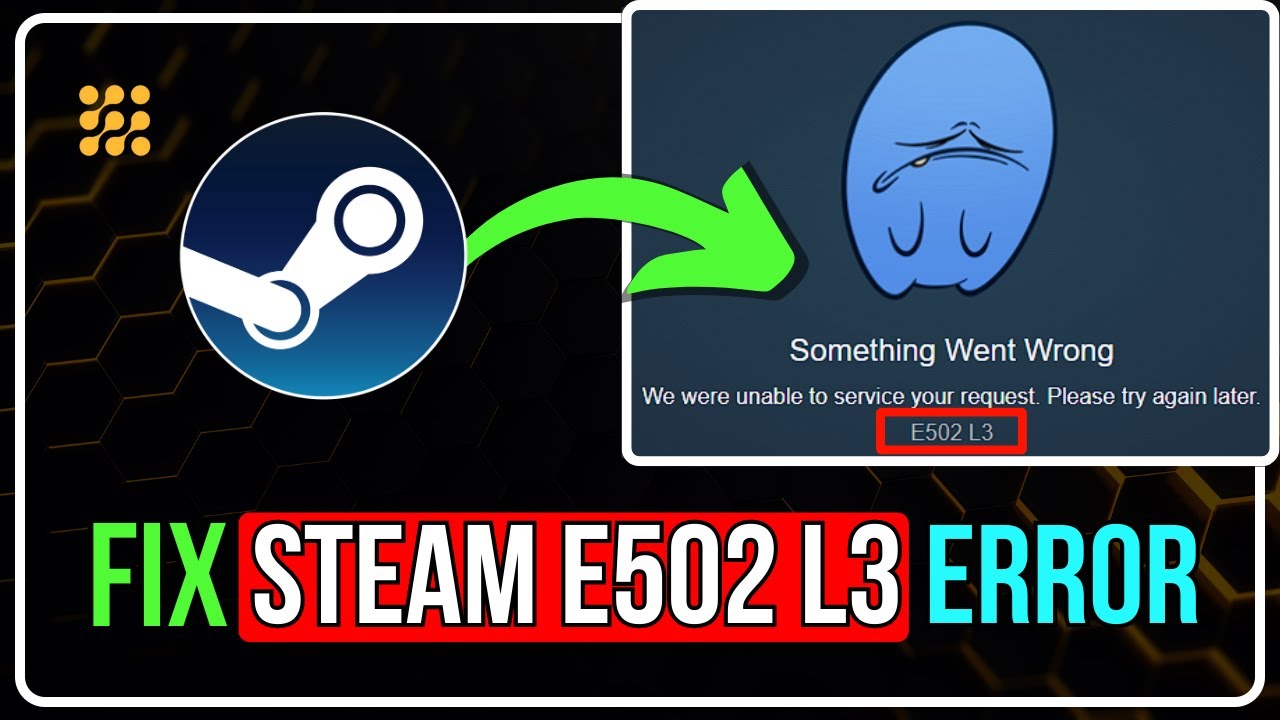
Steam Error E502 L3: What Causes This Frustrating Issue?
Encountering an error when you're just trying to access your favorite gaming platform can be incredibly frustrating. Few things dampen the excitement of a new game launch or a tempting sale like an unexpected error message. If you've ever seen the cryptic "Something went wrong. We were unable to service your request. Please try again later. E502 L3" pop up on your screen, you're not alone. This particular message, known as
Steam Error E502 L3, is a common grievance among Steam users, often appearing at the most inconvenient times.
Whether you're attempting to browse the Steam Store, connect with friends on the Community page, log into your account, or even finalize a purchase, this error can bring your gaming plans to a screeching halt. While it might seem daunting, understanding what causes this issue is the first step toward resolving it. In many cases, the root cause lies not with your personal computer, but with the vast network of Steam's servers themselves.
What Exactly is Steam Error E502 L3?
At its core,
Steam Error E502 L3 signifies a failure in communication. It appears when the Steam client on your desktop, or even the Steam website you're accessing through a browser, is unable to successfully process a request. This could be anything from loading a page, authenticating your login credentials, or completing a crucial transaction. The "E502" part of the code typically points to a "Bad Gateway" error, indicating that one server received an invalid response from another. The "L3" often acts as an internal Steam identifier for the specific type or location of the issue within their system.
While the message itself, "Something went wrong. We were unable to service your request. Please try again later," is generic, the accompanying E502 L3 code helps pinpoint the problem to server-side issues or network connectivity hiccups that prevent your request from being handled correctly. This error can manifest in several scenarios, primarily when:
* You try to open the Steam Store to browse or buy games.
* You attempt to navigate to a Steam Community page, like a game forum or a friend's profile.
* You're trying to log in to your Steam account.
* Crucially, when you're in the middle of a purchase, attempting to make a payment or finalize a transaction.
The frustration is understandable, especially when a time-sensitive sale is on the line. But knowing these common appearances helps narrow down the potential causes.
Unpacking the Root Causes: Why E502 L3 Strikes
Understanding the "why" behind
Steam Error E502 L3 is crucial for effective troubleshooting. While it can stem from various sources, the problem often originates outside of your personal setup.
Primary Suspect: Steam Server Overload
By far, the most frequent culprit behind
Steam Error E502 L3 is the sheer volume of traffic hitting Steam's servers. Valve's platform is a global behemoth, and certain events can cause an unprecedented surge in user activity, leading to server overload. Think of it like a highway during rush hour – too many cars trying to use the same lanes at once can cause a complete gridlock.
Common scenarios that lead to server strain include:
*
Major Sales Events: The Steam Summer Sale, Winter Sale, Halloween Sale, and other seasonal promotions draw millions of users simultaneously. Everyone is eager to snatch up deals, leading to server strain.
*
Major Game Launches: Highly anticipated game releases, especially those with pre-load options or day-one patches, can overwhelm servers as players rush to download, install, and jump into new titles.
*
Significant Updates: Large-scale platform updates or popular game updates can also cause traffic spikes.
*
Peak Usage Hours: Even on a regular day, evenings and weekends often see higher user numbers, which can occasionally test server capacity.
When servers are overloaded, they simply cannot process all incoming requests efficiently, resulting in the E502 L3 error as your request times out or is rejected.
Secondary Suspects: Client-Side & Network Issues
While server overload is prominent, sometimes the problem lies closer to home, or within your network's connection to Steam's vast infrastructure.
*
Corrupted Client Data: Your Steam client stores temporary data (cache) to speed up loading times. If this cache becomes corrupted, it can interfere with proper communication with Steam's servers, preventing pages from loading correctly.
*
Network Routing Problems (DNS Issues): Your computer relies on a Domain Name System (DNS) to translate human-readable website names (like store.steampowered.com) into IP addresses that computers understand. If your DNS cache is outdated or corrupted, it can misdirect your requests, preventing you from reaching Steam's servers or specific services correctly.
*
Temporary Connection Glitches: Minor, transient issues with your internet connection or the Steam client itself can lead to a brief communication breakdown, triggering the error.
*
Specific Server Cluster Overload: Even if Steam's main servers are fine, a specific regional download server cluster might be experiencing temporary overload or maintenance. Your client might be trying to connect to this struggling cluster.
Understanding these potential causes empowers you to take targeted troubleshooting steps, saving you time and reducing frustration. You can find more targeted solutions in our comprehensive guide:
Fix Steam Error E502 L3: A Comprehensive Troubleshooting Guide.
First Steps to Take: Quick Checks Before Deeper Troubleshooting
Before diving into complex solutions, it's always wise to start with the simplest and most likely causes. When you encounter
Steam Error E502 L3, your immediate priority should be to determine if the issue is widespread (Steam's servers) or localized (your computer/network).
Check Steam Server Status First
This is arguably the most critical initial step. If Steam's servers are genuinely experiencing outages or heavy load, no amount of troubleshooting on your end will resolve the issue. You'll simply be wasting your time.
*
Visit Third-Party Status Sites: Reliable websites like DownDetector or Steam Status (e.g., steamstat.us or isthereanydeal.com/steam) provide real-time information on Steam's server health across different services (Store, Community, Login, etc.). These sites aggregate user reports and often provide a clear picture of whether there's a larger outage.
*
Observe the Trends: If these sites indicate widespread outages or a significant number of reports, especially concerning the Store or Community servers, the only viable solution is patience. Valve's engineers will be actively working to restore services.
If the server status checks confirm an outage, rest assured that the error will automatically disappear once Valve restores service, typically within minutes for minor glitches or a few hours for major events. Knowing this saves you from unnecessary troubleshooting steps.
Actionable Solutions: How to Tackle Steam Error E502 L3
Once you've ruled out a global Steam outage, it's time to explore solutions that address potential client-side or network-related causes of
Steam Error E502 L3. These steps are designed to refresh your connection, clear corrupted data, or re-route your requests.
1. Restart the Steam Client
Often, the simplest solutions are the most effective. Restarting your Steam client can resolve many temporary connection problems or software glitches that might be causing the E502 L3 error. It essentially refreshes the communication link between your computer and Steam's servers.
*
Close Steam Completely: Don't just minimize it. Right-click the Steam icon in your system tray and select "Exit."
*
End Any Running Processes: Press
Ctrl + Shift + Esc to open Task Manager. Look for any lingering Steam processes (e.g., Steam Client Bootstrapper, Steam.exe) and end them.
*
Launch Steam Again: Reopen Steam and attempt your action.
2. Clear the Steam Download Cache
Your Steam client stores temporary download data and other cache files to enhance performance. If this cache becomes corrupted or outdated, it can interfere with the client's ability to load store pages or process requests correctly, leading to
Steam Error E502 L3.
*
Open Steam: Launch your Steam client.
*
Access Settings: Click "Steam" in the top-left corner, then select "Settings" (or "Preferences" on macOS).
*
Navigate to Downloads: In the Settings window, click on the "Downloads" tab.
*
Clear Cache: Click the "Clear Download Cache" button. You'll be prompted to confirm.
*
Restart and Log In: Steam will require you to restart and log in again. It will automatically rebuild a fresh cache.
3. Change Your Steam Download Region
Sometimes, a specific regional server cluster managed by Steam can become overloaded or experience temporary issues, even if the overall network is stable. By switching your download region, you force your Steam client to connect to a different set of servers, potentially bypassing the problematic cluster.
*
Open Steam Settings: Access "Steam" > "Settings."
*
Go to Downloads Tab: Select the "Downloads" tab.
*
Find Download Region: Locate the "Download Region" dropdown menu.
*
Select Another Region: Choose a different region, ideally one that is geographically close to you but not necessarily your default, or one known to be less congested.
*
Restart Steam: Close and restart your Steam client for the changes to take effect.
4. Flush Your DNS Cache
Network routing issues can sometimes prevent your computer from establishing a clean connection with Steam's servers. Your computer's DNS cache stores IP addresses of websites you've visited. If this cache is corrupted or contains outdated information for Steam, it can lead to connectivity problems. Flushing it forces your computer to look up the correct addresses again.
*
Open Run Dialog: Press
Windows Key + R.
*
Open Command Prompt: Type
cmd and press
Enter.
*
Run Command: In the Command Prompt window, type
ipconfig /flushdns and press
Enter.
*
Restart Steam: Close Steam completely and relaunch it after flushing your DNS.
5. Try Accessing Steam From a Browser
This simple step helps diagnose whether the issue is specific to your Steam client application or a broader problem with accessing Steam's services. If the client is failing to load pages or process requests, try accessing the Steam Store or Community via your web browser (e.g., Chrome, Firefox, Edge).
*
Visit the Official Store: Open your preferred browser and go to
https://store.steampowered.com.
*
Observe Results: If the web version loads and functions normally while your client struggles, it suggests a client-specific issue or a temporary communication breakdown between your client and a particular server.
This can be particularly useful if you need to make a quick purchase or check a game detail while your client is experiencing the E502 L3 error. For a deeper dive into whether the issue is local or server-related, check out
Steam Error E502 L3: Is It Your PC or Overloaded Servers?.
6. Patience is a Virtue: Waiting for Steam Servers to Recover
As mentioned earlier, if the root cause of
Steam Error E502 L3 is indeed a widespread server issue on Valve's end, no amount of local troubleshooting will help. In such cases, the only solution is to wait for Steam's technical teams to resolve the problem.
*
Typical Recovery Times: Minor outages might resolve themselves within 10 to 30 minutes. More significant events, such as major sales, game launches, or critical updates, could see recovery times ranging from 1 to 2 hours, or occasionally longer during peak stress.
*
Stay Informed: Keep an eye on the third-party server status websites or official Steam social media channels for updates. Once the servers recover, your Steam client should load and function normally without any further action required on your part.
Conclusion
Steam Error E502 L3 can be a significant roadblock to your gaming experience, but it's rarely a sign of a catastrophic problem with your own system. Most often, it's a temporary hiccup, frequently stemming from Steam's servers being overwhelmed by traffic during major sales or game launches. By systematically approaching the issue, starting with a quick server status check and then moving through client-side and network-related solutions, you can efficiently diagnose and resolve the problem. Remember, a little patience often goes a long way, especially when dealing with the colossal infrastructure of platforms like Steam. Happy gaming!